


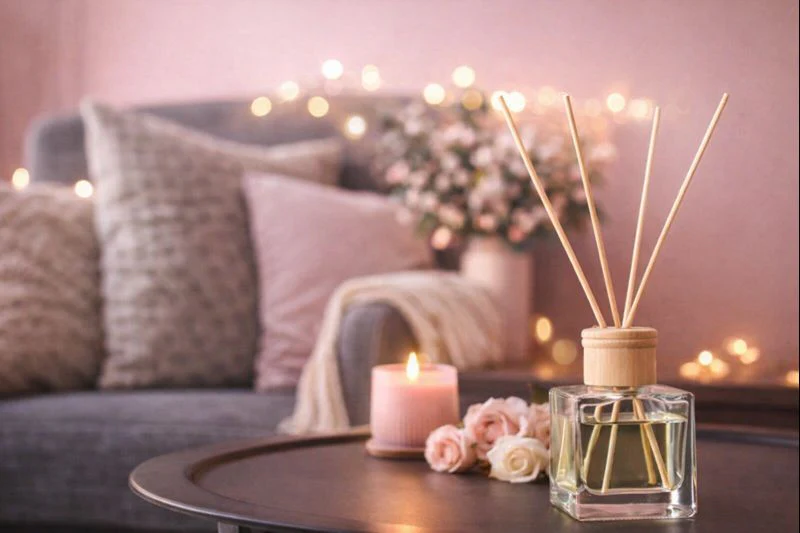
Walk into a high-end hotel lobby in Sydney or Melbourne and you will notice the scent before you notice anything else. That is not one fragrance burning in a corner. It is a carefully constructed scent landscape built from multiple sources, each doing a specific job. A 2024 survey by the Australian Fragrance Council found that 68% of Australians now consider home fragrance a core element of interior styling, yet fewer than one in five know how to layer scents without creating an overwhelming clash.
The result of getting it wrong is a headache and a wasted candle. The result of getting it right is a home that feels expensive, considered, and distinctly yours. At Gleam Haven, we have spent years helping Australian households move beyond single-candle setups to full fragrance environments that work across every room and every season.
This guide gives you a practical, room-by-room method for scent layering using candles, reed diffusers, and linen sprays. No guesswork, no expensive mistakes.
Before You Pick a Fragrance, Get the Order Right
Layering home fragrance works the same way as building an outfit: foundation first, then statement pieces, then finishing details. Skipping steps creates chaos.
- Foundable: Establish a base diffuser scent in each zone. This is your always-on, background note. It should be subtle and clean.
- Believable: Add a candle that complements the diffuser. This is your feature scent, lit during the hours you actually occupy the room.
- Reach: Finish with a linen or room spray for instant refresh or to carry a scent into adjacent spaces.
A common mistake is lighting a strongly scented candle in a room that already has an aggressive diffuser. One Gleam Haven customer replaced her dining room diffuser with a lighter alternative before introducing a spiced fig candle for dinner settings. Within a week, guests were asking what her “secret” was. The candle had not changed. The foundation had.
Start With a Scent Map for Your Home

Before purchasing anything, walk through your home and assign each zone a role. Open-plan living areas need lighter base notes because scent travels. Bathrooms can handle bolder choices because the space is small and enclosed. Bedrooms benefit from calming single-note scents rather than complex blends.
One client in Brisbane had layered three separate citrus candles across her open-plan kitchen, dining, and lounge. The result was a flat, undifferentiated wall of scent. We recommended she keep citrus in the kitchen only, introduce a warm sandalwood diffuser in the lounge, and use an unscented candle in dining to let the food take centre stage. The transformation was immediate.
Specific actions: Draw a simple floor plan and label each zone. Note whether zones are open or enclosed. Identify which rooms need all-day scent and which only need occasional bursts. Consider airflow: ceiling fans and open windows reduce diffuser longevity by up to 40%.
Do not skip this step and buy candles by nose alone in a store. A scent that smells wonderful in isolation can completely overwhelm a small apartment when combined with existing fragrance products.
Choose Your Base: Reed Diffusers and What They Actually Do

Reed diffusers are the workhorses of home fragrance. They release scent continuously at a low intensity, making them ideal for high-traffic areas and enclosed rooms where you want background presence without active burning.
A Melbourne apartment owner using Gleam Haven’s White Tea diffuser reported that her 200ml unit lasted eleven weeks in a 3×4 metre bedroom, with no re-fragrance anxiety between top-ups.
Specific actions: Place diffusers away from direct sunlight, which accelerates evaporation. Flip reeds every five to seven days for consistent throw. Choose diffusers with oil concentrations above 15% for rooms larger than 20 square metres. Match the scent family of your diffuser to the function of the room: clean and green for bathrooms, warm and woody for living areas.
Do not place a diffuser directly next to a candle. Heat destabilises the oil and shortens the product life significantly.
The Feature Layer: Using Candles to Add Depth
Candles deliver intensity and intentionality. They signal that a moment is happening, whether that is a dinner, a bath, or a Sunday afternoon in the garden. Because they are time-limited, they work as a top layer over your diffuser base.
The rule at Gleam Haven: your candle note should share at least one ingredient family with your diffuser note. Pairing a eucalyptus diffuser with a vanilla candle creates two unrelated scent worlds. Pairing that same eucalyptus diffuser with a green tea and mint candle creates a coherent, refreshing environment.
Specific actions: Let your candle burn until the wax pool reaches the edges of the vessel before extinguishing. This prevents tunnelling and ensures full fragrance throw. Trim wicks to 5mm before every burn. Choose candles with a minimum 8% fragrance load for genuine throw in rooms above 15 square metres.
Do not expect a candle alone to fragrance a large open-plan space. They are a layer, not a system.
The Finishing Layer: Linen and Room Sprays
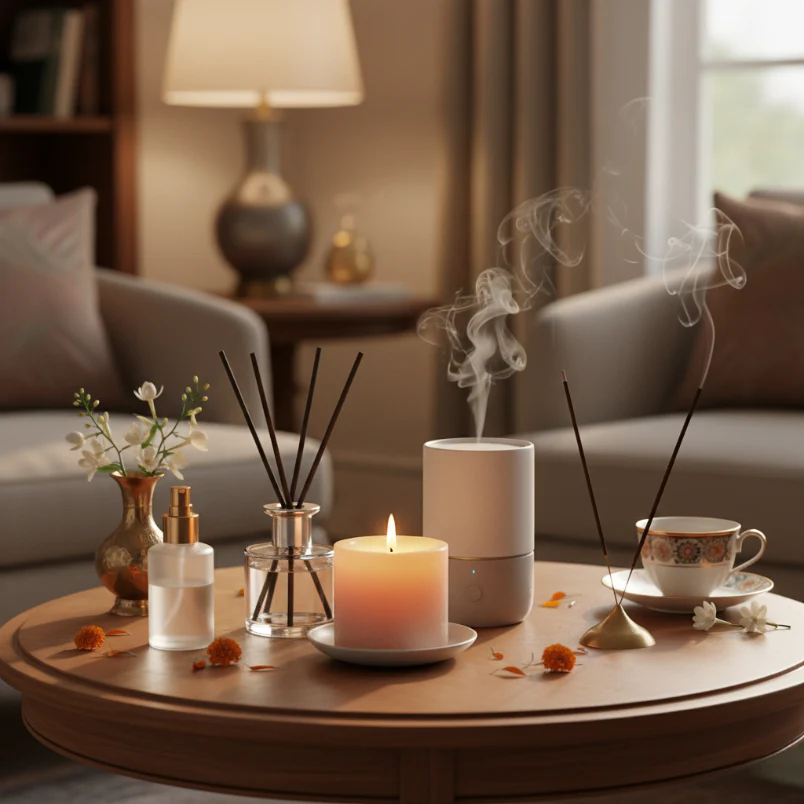
Room and linen sprays work in seconds and last 20 to 40 minutes. They are not a substitute for a diffuser or candle, but they are invaluable for fast refresh before guests arrive, or for carrying scent into rooms where a flame is not practical.
Specific actions: Spray linen on cushion covers and curtains rather than directly onto furniture. Hold the bottle at least 30cm from fabric to avoid moisture marks. Use the same scent family as your room’s base diffuser for coherence. Two to three spritzes is sufficient for a standard bedroom.
Do not overuse. Multiple sprays in a small space compound quickly and become unpleasant within minutes.
Room-by-Room Scenario Comparison: Scent Layering Combinations
| Room | Zone Type | Recommended Diffuser Note | Recommended Candle Note | Linen Spray Use | What to Avoid |
|---|---|---|---|---|---|
| Open-plan living | Large, multi-use | Light sandalwood or white musk | Warm amber or smoked cedar | Pre-guest refresh only | Citrus candles (too sharp in large spaces) |
| Kitchen | Moderate, active | Lemon or green herbs | Unscented or beeswax | Not recommended | Heavy florals (clash with food aromas) |
| Master bedroom | Small, enclosed | Lavender or clean cotton | Chamomile or vetiver | Pillow and linen spritz nightly | Multiple scent families at once |
| Bathroom | Small, high-humidity | Eucalyptus or mint | Bergamot or sea salt | Optional post-shower spritz | Gourmand scents (vanilla, caramel) |
| Home office | Moderate, focused use | Rosemary or green tea | Citrus or black pepper | Not recommended | Heavy resins mid-morning |
| Outdoor entertaining | Open, variable airflow | No diffuser; use candles only | Citronella blend or lemongrass | Not applicable | Delicate florals (lost to breeze) |
What We Have Learned Working With Home Fragrance Customers Across Australia
The pattern we see consistently: customers who struggle with home fragrance have invested in scents they love individually but have never considered how they interact. The principle that fixes this almost every time is treating fragrance like lighting. You would not install four spotlights all pointing at the same spot. You layer them: ambient, task, and accent. Scent works exactly the same way.
If you have ever walked into your own home and felt like something was off but you could not identify what, the answer is usually fragrance imbalance rather than anything structural. Explore Gleam Haven’s fragrance pairing collections to find combinations designed to work together from the start.
Frequently Asked Questions
How many fragrances can I safely layer in one room? In most residential rooms, two complementary scents are the practical maximum. One active diffuser and one candle from the same scent family creates depth without confusion. Adding a linen spray in the same family is acceptable as a third element, but only used briefly. Three competing fragrance sources running simultaneously in an enclosed room almost always creates an unpleasant outcome.
What is the difference between top, middle, and base notes in home fragrance? Top notes are what you smell immediately when you open a candle or flip diffuser reeds. Middle notes emerge after five to fifteen minutes of burn or diffusion. Base notes are the lingering finish that remain after the candle is extinguished. A quality layered environment mimics this structure: light, fleeting top notes from a spray; warmer, rounder middles from a candle; and long, grounding base from a diffuser.
Does scent layering work in Australian climates with air conditioning? Yes, with some adjustments. Air conditioning reduces humidity, which shortens candle burn time and can dry out diffuser reeds more quickly. Flip your diffuser reeds more frequently in summer. In air-conditioned rooms, choose diffusers with a higher oil concentration and candles in a heavier vessel that retains heat. Coastal homes in Queensland or New South Wales can lean into lighter, aquatic layering combinations that complement the natural salt air.
How do I know if I have over-fragranced a room? The most reliable test is to leave the room for ten minutes and re-enter. If the scent hits you immediately as overpowering rather than welcoming, you have exceeded the threshold. The fix is to extinguish the candle, remove one diffuser, and ventilate for 30 minutes before re-evaluating. Over-fragrancing is far more common than under-fragrancing and harder to undo quickly.
I rent my home and cannot use candles. What is the best alternative layering strategy? Reed diffusers are the primary tool for renters. Use two diffusers in different scent families that share a common note, for example, a lavender diffuser and a eucalyptus diffuser both anchored by clean, herbal characteristics. Add a linen spray for occasional intensity. Electric ultrasonic diffusers using fragrance oils are an effective candle substitute and are permitted in virtually all rental agreements.
Are there fragrance combinations specifically suited to Australian native botanicals? Australian native notes including wattleseed, lemon myrtle, Kakadu plum, and boronia pair naturally with globally common base notes like sandalwood and white musk. Lemon myrtle diffusers layer exceptionally well with unscented or beeswax candles in kitchens. Wattleseed and vanilla create a distinctly Australian warm gourmand combination suited to living areas in cooler southern-state climates like Victoria and Tasmania.
About the Author
Gleam Haven is a Melbourne-based party supply store with over eight years of experience helping Australians create beautiful, memorable celebrations. From stylists and homeowners to hospitality clients across the country, Gleam Haven has become a trusted name in party décor and event styling. Featured in home and lifestyle publications, Gleam Haven also offers seasonal collections designed to elevate every occasion. Learn more at gleamhaven.au.